
Share of IPOs opening above issue price drops to 64.6%, median gains shrink sharply amid market volatility.

India is closely monitoring Sri Lanka's decision to offer foreign investors control of an airport near the China-controlled Hambantota port, as it could present a rare opening for Indian firms seeking strategic footholds in the Indian Ocean.

Indian stock market benchmarks Sensex and Nifty closed higher on Tuesday, buoyed by a drop in crude oil prices, a rally in global markets, and strong buying in IT stocks.

Despite reporting a weaker-than-expected net loss of Rs 2,536 crore for Q4FY26, largely due to a significant non-cash forex loss, analysts remain optimistic about IndiGo's long-term prospects, citing strong demand trends, a favourable pricing outlook, and strategic cost-control measures.

'The next phase of India's IPO cycle will be defined by quality, pricing discipline and investor selectivity.'

The Indian rupee is highly vulnerable among Asian currencies, with Barclays and MUFG warning of a potential depreciation towards 100/$ if the West Asia conflict persists, driven by widening current account deficits and elevated crude oil prices.

Domestic mutual funds (MFs) have underpinned demand for most public floats this year, dominated by small- and mid-sized initial public offerings (IPOs). Of the 24 IPOs that have hit the market so far this financial year (2023-24, or FY24), MFs have played the role of 'anchor investors' in 20. They have subscribed to over 40 per cent, or Rs 2,850 crore, worth of shares of the Rs 6,900 crore on offer in the anchor category, according to data provided by PRIME Database, a firm that tracks primary market data.

TVS Venu Group has agreed to acquire a minority stake of up to 9.9 per cent in Jana Small Finance Bank, including a 4.9 per cent ownership by TVS Motor Company, through a combination of primary issuance of warrants and a secondary purchase.

The biggest risk for investors isn't the market, but their own minds, biases and emotions often lead to poor financial choices.
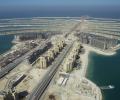
Ongoing geopolitical tensions in West Asia have slowed deal momentum in Dubai's luxury residential market, but Indian high-net-worth individuals (HNIs) are not exiting their marquee assets, with any 'discounted' resale deals attributed to investor liquidity stress rather than geopolitical flight.

The Securities and Exchange Board of India (Sebi) is set to introduce key reforms aimed at facilitating smoother mega initial public offerings (IPOs). Key among the proposals is a reduction in the quota reserved for individual investors - those applying for less than Rs 2,00,000 per application - from the current 35 per cent to 25 per cent for large IPOs (issue size above Rs 5,000 crore).

Eyewear retailer Lenskart Solutions is gearing up to launch its initial public offering (IPO) on October 31, aiming to raise Rs 2,150 crore through a fresh issue of shares. This marks its much-awaited entry into the public markets.
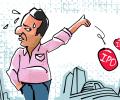
India's equity markets may have expanded rapidly, but initial public offerings (IPOs) are increasingly becoming exit vehicles for early investors rather than as engines for raising long-term capital, a shift that undermines the spirit of public markets, Chief Economic Advisor V Anantha Nageswaran warned on Monday at a CII event.

'...aggressive pricing amid volatility, but these are exceptions.'

The initial public offer of app-based beauty and home services platform Urban Company Ltd received overwhelming investor participation, with the issue getting a huge 103.63 times subscription on the last day of bidding on Friday. The Rs 1,900-crore IPO received bids for 11,06,46,08,960 shares against 10,67,73,244 shares on offer, according to NSE data.

Their assets under management (AUM) rose from Rs 1.04 trillion (January 31, 2025) to Rs 1.75 trillion (January 31, 2026), an increase of 68.3 per cent.
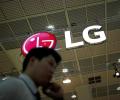
The initial public offering of LG Electronics India Ltd received 54.02 times subscription on the final day of bidding on Thursday, driven by overwhelming participation from institutional buyers.

Is Bhutan merely experimenting with digital finance -- or is the Himalayan kingdom punching far above its weight, quietly playing one of the most sophisticated strategic games in Asia today? asks Varun Arya.

Benchmark stock indices Sensex and Nifty closed higher on Thursday, helped by a rally in blue-chip Larsen & Toubro and the Economic Survey projecting the GDP growth of 6.8-7.2 per cent for the next fiscal.

Stock market is gearing up for an eventful week ahead where key triggers such as quarterly earnings from corporates, the US Fed interest rate decision and the upcoming Union Budget for 2026-27 would grab the limelight, analysts said.

Edtech unicorn PhysicsWallah on Thursday fixed a price band of Rs 103-109 per share for its upcoming initial public offering (IPO), aiming for a valuation of over Rs 31,500 crore at the upper end. The company's Rs 3,480-crore maiden public offering will open on November 11 and conclude on November 13 and anchor investors will be allocated shares on November 10, according to its public announcement.

Mutual fund investment through systematic investment plans (SIPs) has surged to an all-time high of Rs 3.34 lakh crore in 2025, driven by growing investor appetite for disciplined, long-term wealth creation.

India's high cost of capital due to relatively shallow corporate bond markets, limited institutional investor depth, sovereign risk premia, and regulatory restrictions on capital flows, is a constraint on private investment and long-run growth, the Economic Survey, authored by Chief Economic Advisor (CEA) V Anantha Nageswaran, said.

Indian corporates collectively raised over Rs 17,500 crore from the domestic debt capital market through bond issuances on Tuesday. The issuances were led by Bharti Telecom's Rs 10,500 crore fundraise in two tranches, the largest by an Indian company in the domestic market so far in FY26.

'We kept this Budget on a larger plank, rather than on one incident, however serious.'

Investors may wait for six months and then take another look at the stock.

Foreign portfolio investors (FPIs) have invested Rs 25,300 crore through the anchor book for IPOs in 2024, surpassing the Rs 20,351 crore invested by domestic mutual funds (MFs). FPIs accounted for 46.6 per cent of shares sold in the anchor category, the highest share since 2021, according to PRIME Database.
Global investors have cited the ongoing war and high valuations of Indian equity markets as a reason to skip the IPO.

From the Sensex firms, HCL Tech, Tata Steel, Tech Mahindra, Reliance Industries, Bharat Electronics and ICICI Bank were among the laggards. Bajaj Finance, Hindustan Unilever, UltraTech Cement and Power Grid were among the gainers.

The rupee slumped 5 per cent in 2025 as persistent capital outflows from foreign investors, alongside heightened dollar demand from importers, making it one of the worst-performing Asian currencies.

Domestic mutual funds have infused the highest ever -- Rs 4.84 trillion -- this year amid strong inflows via SIPs.

'A breakout above 158,000 to 160,000 could trigger the next leg higher toward 165,000 to 170,000.'
'The first time India has seen two consecutive blockbuster IPO years.'

A December 28 board meeting of the Securities and Exchange Board of India (Sebi) may tighten norms for initial public offerings (IPOs). The board may look to prescribe a minimum 5 per cent gap in IPO price bands, extend the lock-in period for anchor investors to 90 days and cap the amount a majority investor can sell through offer for sale. The regulator is looking at whether there can be a preferred allocation for anchor investors who opt for a longer lock-in period, said a person familiar with the matter.
Tata Capital is set to launch India's largest ever initial public offering (IPO) by a non-banking financial company (NBFC), valuing the Tata group firm at Rs 1.38 trillion. This will make the company India's fifth-most-valued NBFC after Bajaj Finance (Rs 6.12 trillion), Bajaj Finserv (Rs 3.2 trillion), Jio Financial Services (Rs 1.87 trillion), and IRFC (Rs 1.59 trillion).

India's leading conglomerates are stepping up investments in real estate, recasting what was once a peripheral activity into a core growth driver. Supported by strong balance sheets, established brands and access to long-term capital, major business houses including Aditya Birla, Tata, Godrej, L&T, Raymond, Wadia, Shapoorji Pallonji, Mahindra and Adani are positioning realty as a strategic pillar within their diversified portfolios.

The Indian rupee, swaying through multiple headwinds, tiding over global trade disruptions and massive foreign fund outlfows, is unlikely to arrest its descent until tariff impact overhangs, notwithstanding robust domestic macroeconomic tailwinds. The Reserve Bank of India (RBI), which sees the rupee's depreciation as a silver bullet to offset the tariff shock, expects the currency to find its stable course once India reaches a trade deal with its largest trading partner, the US.

The sovereign AI park will be a first-of-its-kind, purpose-built district in India, integrating AI compute infrastructure, secure data frameworks, model research labs, and AI innovation clusters, along with a dedicated institute for AI in governance.

In November, six primary market issuances accounted for more than 13,000 crore of net equity investments by MFs.

This Budget positions India's taxation ideology as not merely a revenue source but as a strategic catalyst for growth, inclusion and long-term confidence.
